
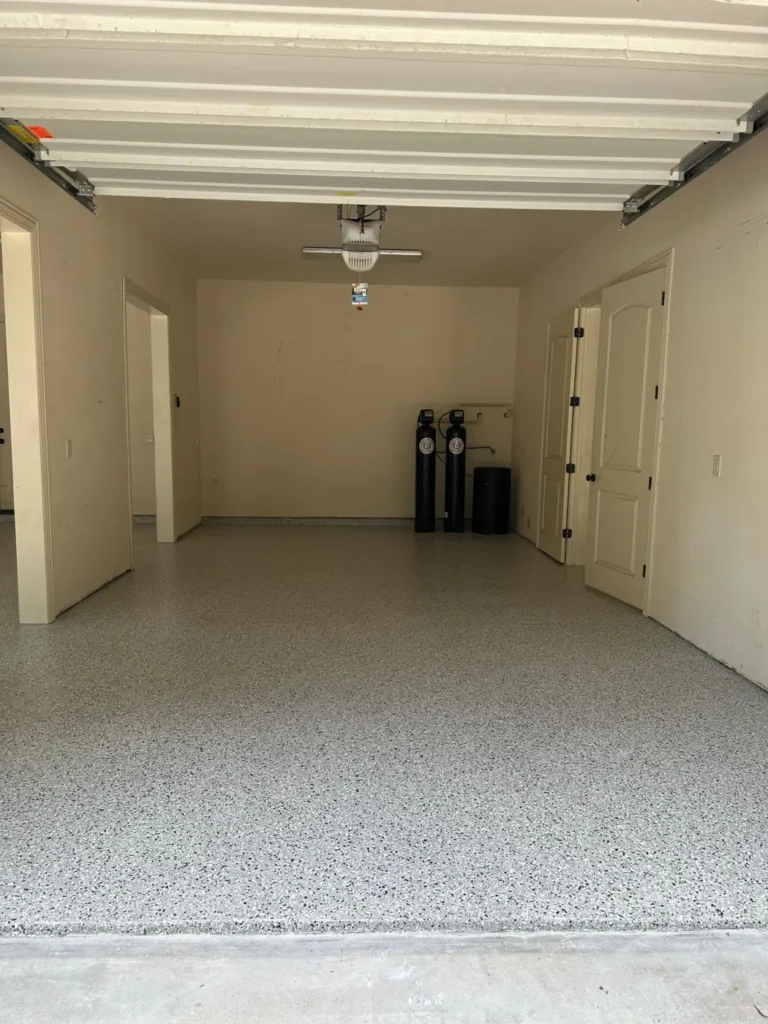
Wait until the slab is dry, not just 28 days old. We test the moisture in new concrete before we coat it.
- Curing and Drying Are Not the Same ThingPeople use the two words as if they mean one thing, and that is where most bad advice starts.
- What Builders Leave on a New SlabA brand new garage floor is rarely bare concrete.
- New Homes We See Most Around ConroeA lot of our new-build calls come from the communities growing along Highway 242 and around Conroe.
- How Gulf Coast Weather Slows the Drying ClockConcrete dries by letting water escape from its surface, and that only works when the air around it is drier than the slab.
Curing and Drying Are Not the Same Thing
People use the two words as if they mean one thing, and that is where most bad advice starts. Curing is the chemical reaction that gives concrete its strength. It begins the moment cement meets water, and a slab gets most of its strength in the first week or so. Drying is the slow loss of the extra water left in the slab.
The 28-day number you hear everywhere is the standard point at which concrete is considered fully cured under normal conditions. Industry guidance puts drying at roughly 30 days per inch of thickness in ideal conditions, and a typical 4-inch garage slab can take far longer than a month when the air is humid, airflow is poor or the ground underneath stays wet. That is a lot of Gulf Coast garages for a lot of the year.
What Builders Leave on a New Slab
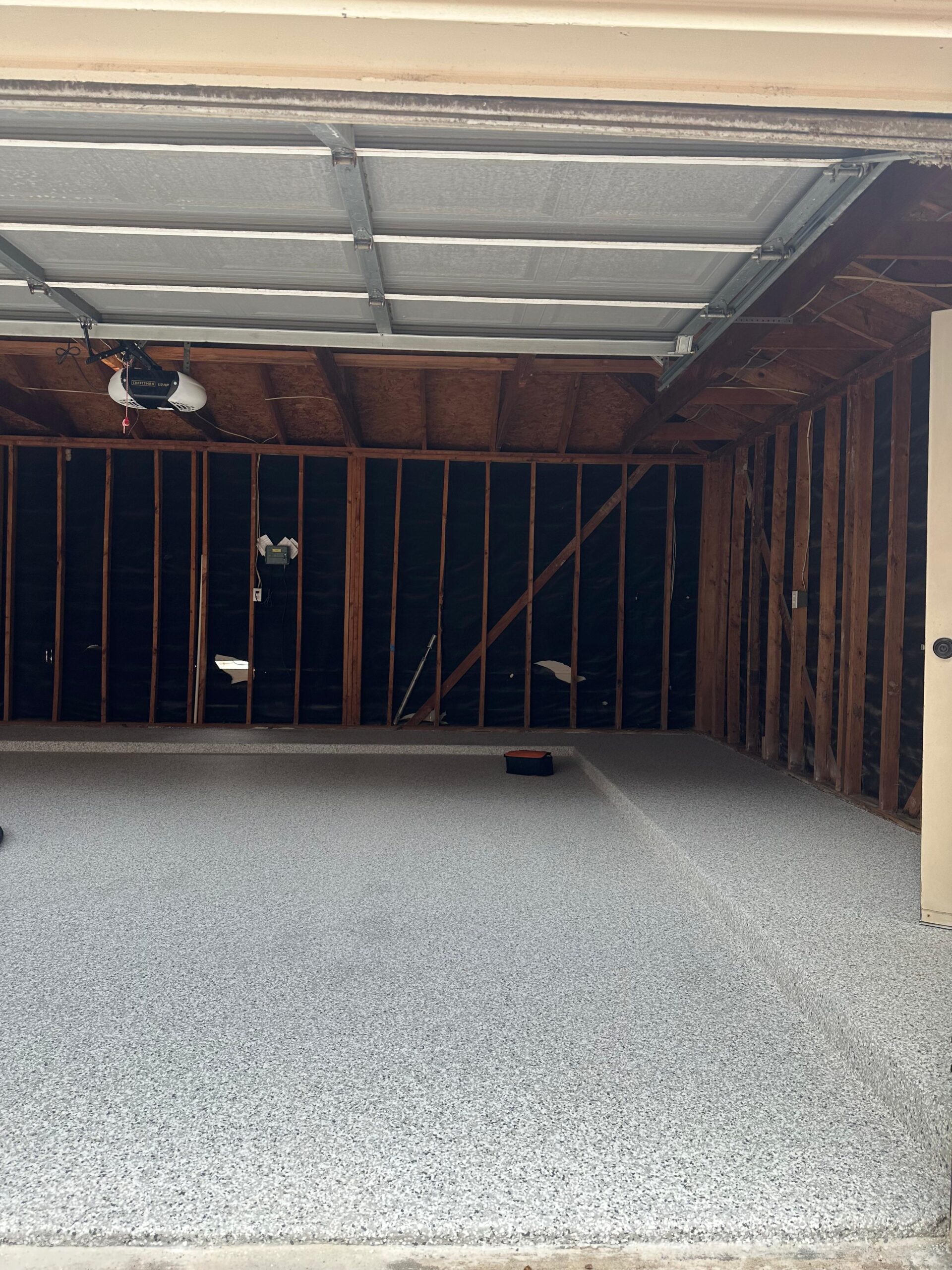
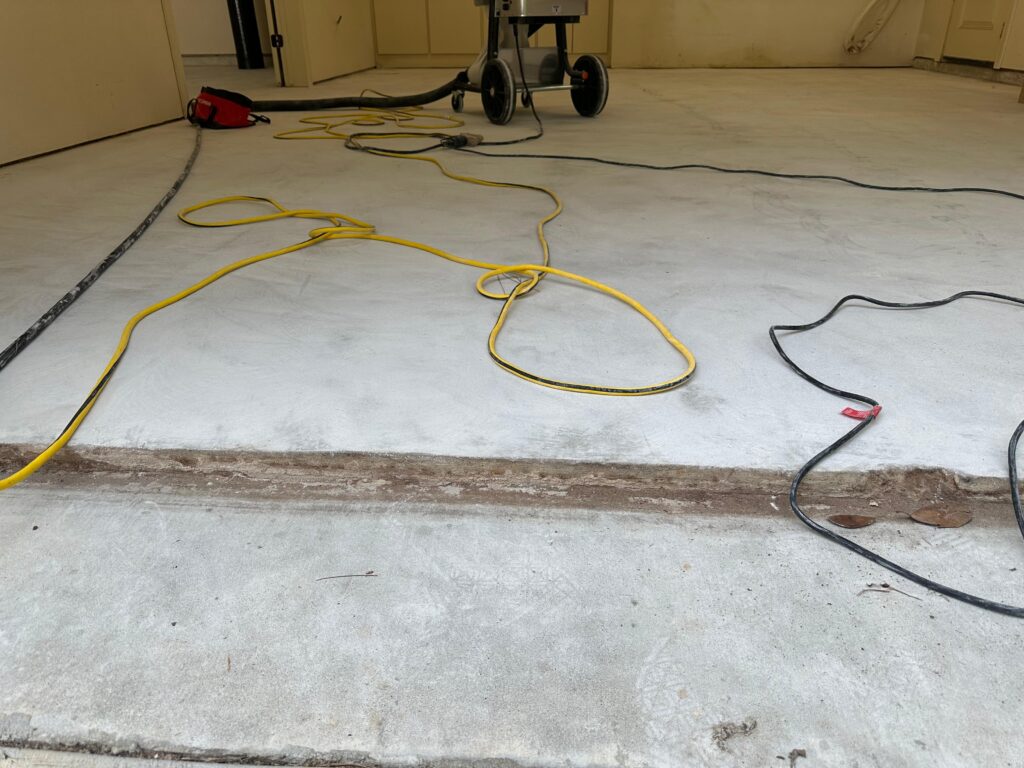
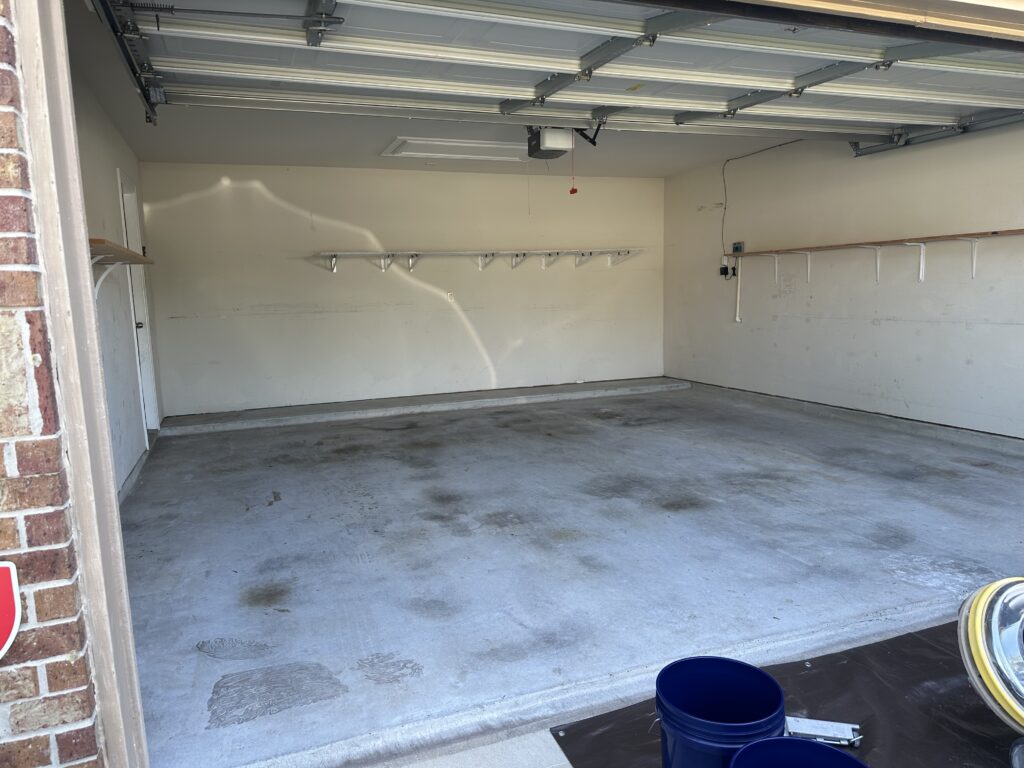
A brand new garage floor is rarely bare concrete. Builders often spray a curing compound to help the slab cure evenly, and some finish the surface with a sealer or a very smooth trowel. Any of these can block a coating from bonding. They do not come off with a broom. They come off with a diamond grinder, which is why grinding is part of every floor we install and not an upgrade.
One more rule that surprises people: do not roll on a sealer or paint to “protect” new concrete while you wait. It can trap moisture inside the slab and then has to be ground off before epoxy goes on.
New Homes We See Most Around Conroe
A lot of our new-build calls come from the communities growing along Highway 242 and around Conroe. Artavia, Mavera and Evergreen are all new master-planned neighborhoods off the 242 corridor, and Cielo is rising off Airport Road. Homes in places like these are handed over with fresh slabs, which is the best time to plan a floor and the worst time to coat in a hurry. Our Conroe page lists the neighborhoods we serve, and our Woodlands page covers the newer sections to the south.
How Gulf Coast Weather Slows the Drying Clock
Concrete dries by letting water escape from its surface, and that only works when the air around it is drier than the slab. In a closed, humid garage the air stays damp for days at a time, a garage door that stays down all day leaves little airflow, and wet weather plus moisture in the ground underneath slow things further. A slab poured during a dry stretch usually dries faster than one poured before a wet spring. That is why two neighbors with the same builder can get very different readings.
Send photos or book a free on-site estimate. We put the price in writing before any work starts.
Signs a Slab Is Still Too Wet
- Dark or cool-looking patches that stay damp after the rest of the floor lightens.
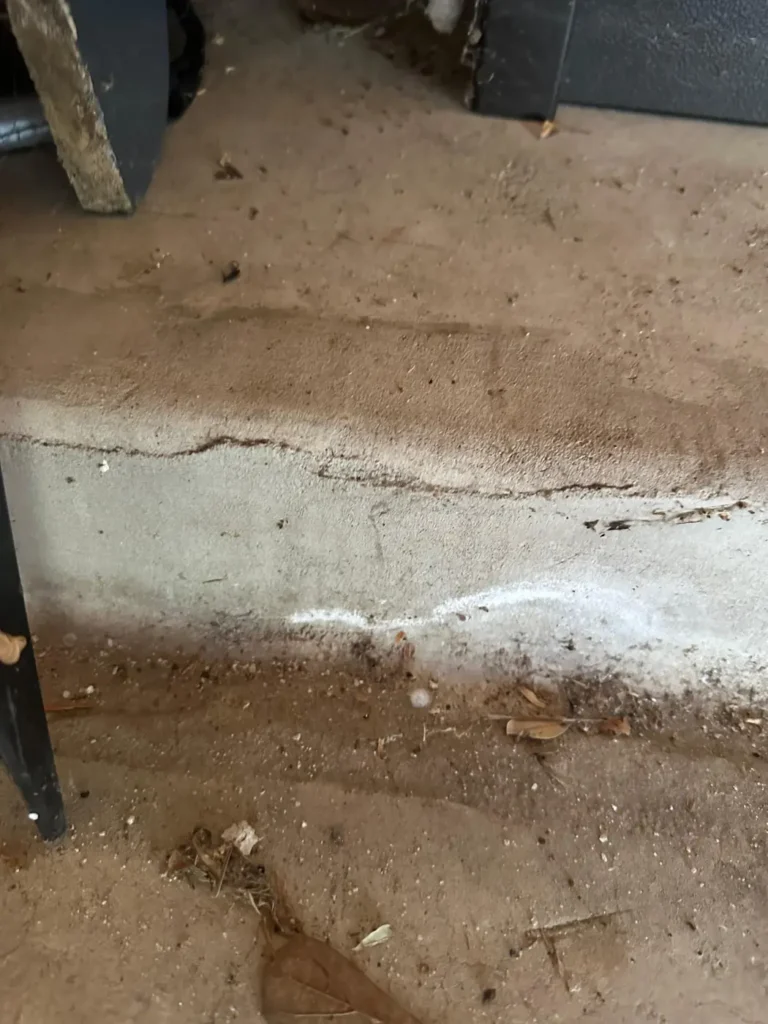
- A white, powdery film on the surface, called efflorescence, left behind as water evaporates.
- Condensation under a plastic sheet taped to the floor for 24 hours.
- A musty smell in a closed garage.
- Paint, tape or an earlier coating that lifts easily.
None of these is a diagnosis on its own, but any of them is a reason to test before anything goes on the floor.
What to Expect by Slab Age
| Slab Age | What We Recommend |
|---|---|
| Under 2 weeks | Leave it bare, keep the garage ventilated and book an estimate. Do not seal or paint. |
| 2 to 4 weeks | We can measure and run moisture tests. Moisture-tolerant systems may be an option. |
| 4 weeks and older | The usual time to coat, as long as the moisture readings are good. |
| Any age with damp readings | Wait and retest, or add moisture protection to the system. |
A Simple Plan for a New Slab
- Move in and leave the floor alone. Keep the garage open to airflow when you can. Skip sealers, paint and cleaners that leave a film.
- Book an estimate in the first month. We measure, look at the slab and test for moisture. You get a price and a realistic coating date.
- We retest after the grind. Grinding opens the pores, and a second moisture check tells us how the slab really behaves.
- Coat when the numbers say so. If the slab is dry enough, the floor goes down. If not, we talk through waiting or moisture protection.
Just Closed on a New Home?
Tell us your neighborhood and when the slab was poured. We will tell you when to book and what to expect.
Can You Coat Sooner Than 28 Days?
Sometimes. Some epoxy manufacturers publish moisture-tolerant primers and breathable systems for younger concrete, and one major maker says its systems can go onto green concrete as early as 7 days after the pour. Whether that fits your slab depends on the actual moisture readings, the weather and how the garage will be used. It is a decision we make from test results, not from the date on the calendar. If you are curious how those tests work, read our moisture testing guide.
Why Waiting Is Cheaper Than Redoing
A coating applied over a damp slab can blister, cloud or lift, and the repair is a full removal and recoat. Waiting a few extra weeks for a dry slab costs nothing. Redoing a failed floor costs the whole job again. The cost guide shows what a correct install runs, so you can see how little the wait adds by comparison.
Questions About New Concrete and Epoxy
Can I epoxy a garage floor that is only two weeks old?
Usually not with a standard epoxy system. Most manufacturers call for about 28 days, and some moisture-tolerant systems allow less. The right answer comes from testing your slab, not from its age.
How do I know when my new slab is dry enough?
The reliable way is a moisture test in several spots across the slab. A taped plastic sheet left for 24 hours gives a rough clue, but it is not precise. We test before and after grinding.
Should I seal new concrete while I wait?
No. A sealer or paint can trap moisture and has to be ground off before a proper coating, so it adds work and cost.
Does a builder-grade slab need grinding?
Yes. Curing compounds and smooth troweled surfaces can stop a coating from bonding, so we diamond grind every slab, new or old.
Can the floor be coated before I move in?
It can be scheduled that way when the slab tests dry enough. Book your estimate early so we can plan around your closing date.
Want a Price in Writing for Your Floor?
Tell us about your garage, patio or walkway. We send a free written estimate before any work starts, with the price in writing.
More Guides

How Much Does an Epoxy Garage Floor Cost in Conroe, TX?
What an epoxy flake garage floor costs in Conroe and north Houston: $5 per square foot starts the price, a $1,250 minimum applies, and here is…
7 min read →
How to Choose an Epoxy Flooring Contractor in Montgomery County
Texas has no statewide contractor license. Here are nine questions, red flags and estimate tips for choosing an epoxy flooring installer in Montgomery County.
6 min read →
Epoxy Garage Floors in Texas Heat: Curing, Humidity and Timing
How Texas heat, humidity and dew point affect an epoxy garage floor install, and how a two-day job is planned around them in Conroe and north…
6 min read →