
Home/Guides/Concrete and Moisture
Guide · Concrete and Moisture
Moisture Testing Before Epoxy: Garage Floor Guide for Texas
How garage floor moisture testing works, which tests matter, a five-minute check you can do at home and what to do when your Texas slab reads high.
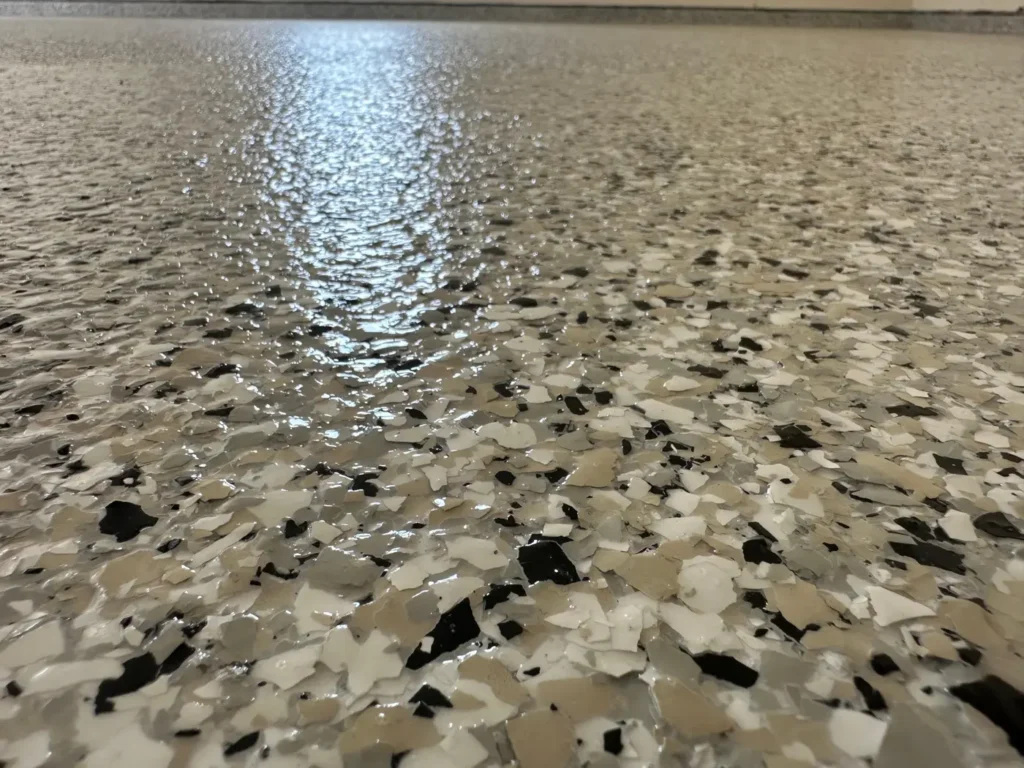
A moisture test shows whether water vapor in your slab could push a coating off later. We test before and after we grind, so problems are caught before the floor goes down.
- Why Moisture Ruins Good EpoxyConcrete is porous. Water in the soil underneath, or left over from the pour, moves up through the slab as vapor and escapes at the surface.
- The Three Common Moisture TestsThere is more than one way to test a slab, and they answer slightly different questions.
- A Plastic Sheet Check You Can Do TodayYou do not need equipment for a first look.
- Why We Test TwiceA slab that reads fine at the surface can behave differently once the top layer comes off.
Why Moisture Ruins Good Epoxy
Concrete is porous. Water in the soil underneath, or left over from the pour, moves up through the slab as vapor and escapes at the surface. Put a sealed coating on top and that vapor gets trapped under it. The result is bubbles, cloudy patches or a floor that lifts in sheets a few months after the install, long after the contractor has left.
Much of the Houston area sits on clay-heavy soil that holds water, and Gulf humidity keeps the air damp most of the year. That combination makes moisture the first thing worth checking, not the last.
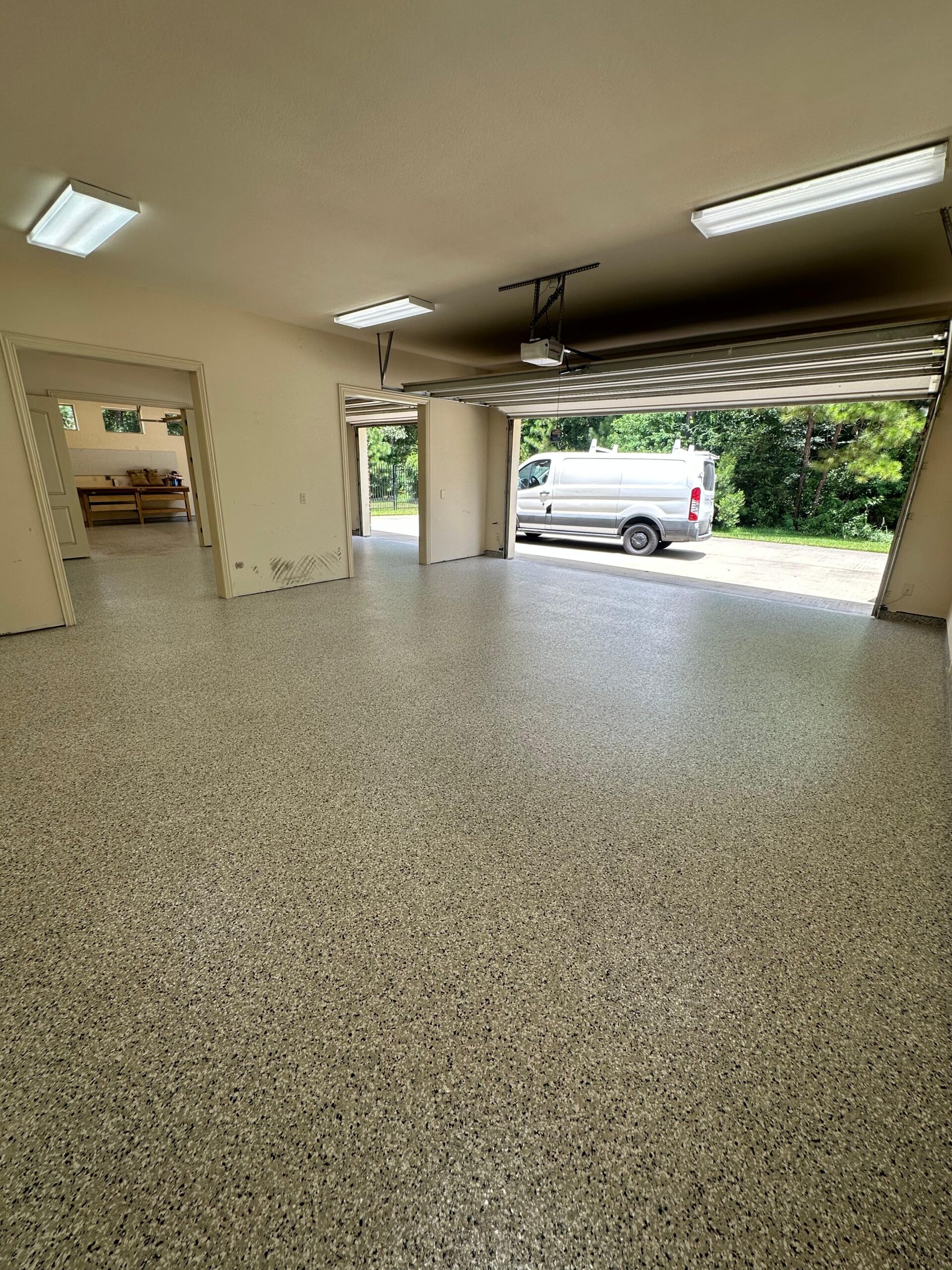
The Three Common Moisture Tests
There is more than one way to test a slab, and they answer slightly different questions. Here is how they compare:
| Test | What It Measures | Typical Limit | How Long |
|---|---|---|---|
| Plastic sheet (ASTM D4263) | Whether moisture shows up at the surface | No condensation or dark patches | About 24 hours |
| Calcium chloride (ASTM F1869) | Vapor leaving the surface, in pounds per 1,000 sq ft per 24 hours | Under 3 lb for standard systems | 60 to 72 hours |
| Digital humidity tester | Relative humidity at the slab | The limit printed on the coating’s data sheet | Minutes, once the reading settles |
Limits vary by product, so the number that matters is the one printed on the data sheet of the coating going down. The plastic sheet test is the least precise of the three, and some product warranties will not accept it. It is a useful first clue, not a final answer.
We also use moisture readers on every floor. A handheld reader gives a number in seconds, so we can scan the whole slab, mark the spots that read higher than the rest and give those spots a closer look with a formal test. We read the slab before grinding and again after, because grinding removes the top layer and can change the reading. A reader is a fast way to find trouble, and the tests above are how you confirm it.
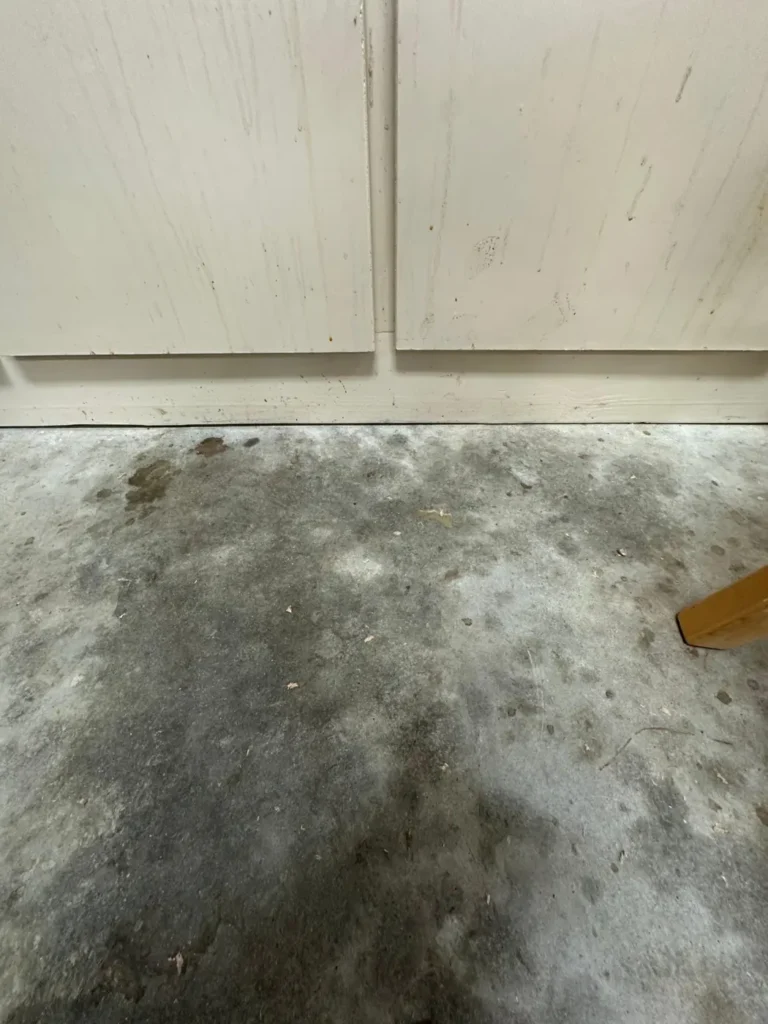
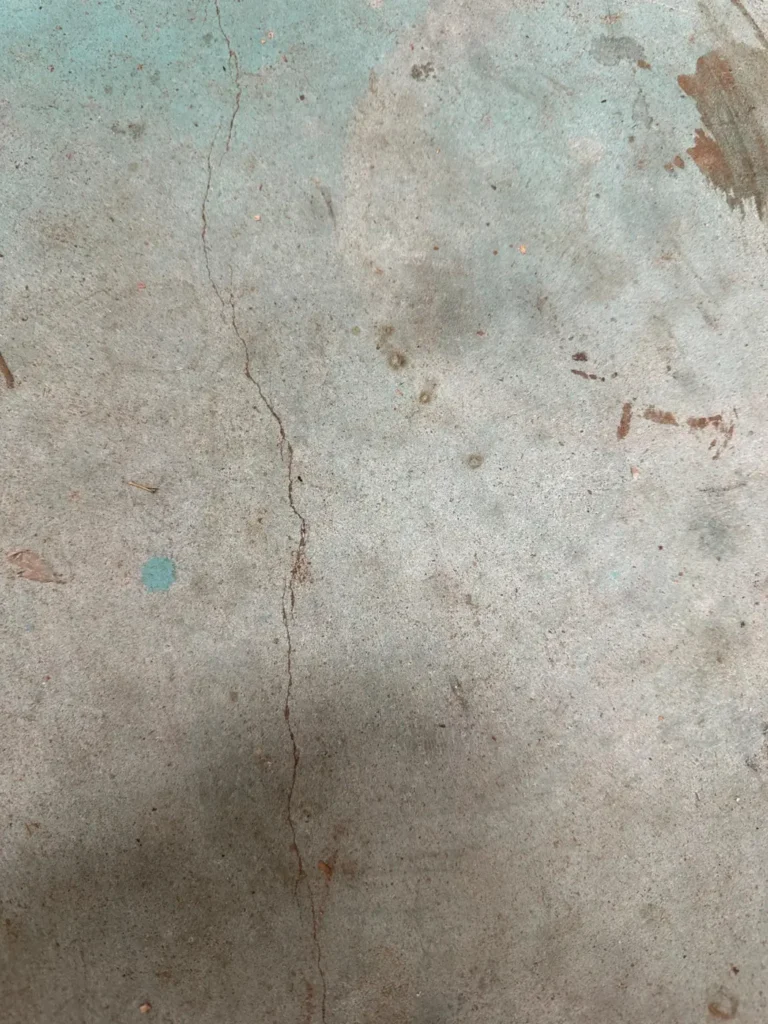
A Plastic Sheet Check You Can Do Today
You do not need equipment for a first look. This takes five minutes of work and a day of waiting:
- Pick two or three spots. Choose one near the garage door, one near the house wall and one in the middle.
- Clean each spot. Sweep it and wipe away dust so the tape sticks.
- Tape down a plastic sheet. Use a clear sheet at least 12 inches square and seal every edge with tape.
- Wait 24 hours. Keep the garage closed and the temperature steady.
- Look and feel. Droplets under the sheet, or concrete that looks darker than the floor around it, mean there is moisture to deal with.
If the sheet stays dry, that is encouraging but not a guarantee. If it fogs up, wait a week or two and try again, then book a real test.
Want Your Slab Tested Properly?
We test for moisture at the estimate and again after the grind. You see the result before any coating goes down.
Why We Test Twice
A slab that reads fine at the surface can behave differently once the top layer comes off. Diamond grinding removes the surface and opens the pores, which can release more vapor than a sealed or troweled top. That is why we check moisture before the grind and again after it. The first test tells us whether to go ahead, and the second tells us the floor is truly ready for the base coat.
Send photos or book a free on-site estimate. We put the price in writing before any work starts.
What a High Reading Means
A high number is not the end of the project. It is information, and it points to one of three paths:
- Wait and retest. If the slab is young, a few more weeks of drying may be all it needs. Our new concrete guide covers the timeline.
- Add moisture protection. Some floors need extra prep, such as a moisture-mitigating layer, before the epoxy goes on. It shows up as its own line in the estimate.
- Fix the source. Gutters that dump water against the slab, a downspout aimed at the garage door or a leaking line can keep a floor damp no matter how long you wait.
Moisture and Older Garages
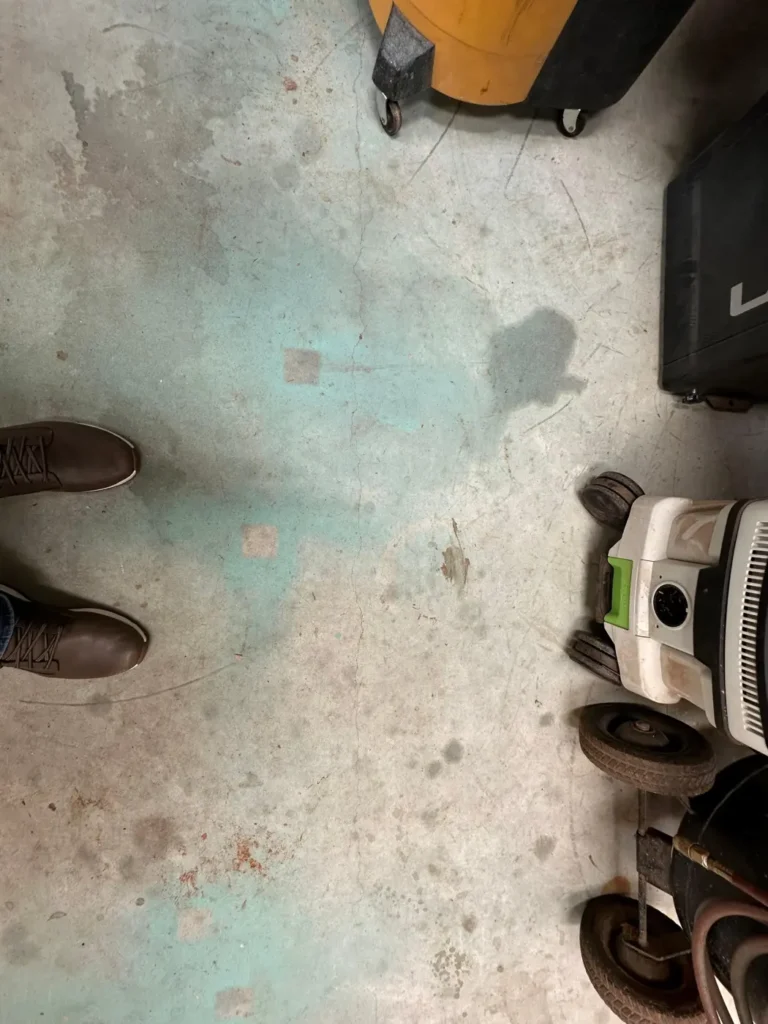
Moisture is not just a new-home problem. Older garages in places like Conroe, Willis and Humble can have slabs that have been damp for years, often with old paint peeling in the same spots every season. Those peeling patches are a free test result. If a past coating lifted in one corner, we want to know which corner. Share what you have seen when you book, and check our Conroe and Willis pages for what we see in those areas.
What Testing Does Not Tell You
Testing does not predict every problem. It will not tell you about a cracked slab that shifts, and it will not find a leak that only appears after heavy rain. That is why we also look at cracks and drainage at the estimate, and why we do not repair foundation cracks. We tell you what we find, even when it means advice to fix something first. For the full list of what goes into a finished floor, see our garage floor coating page.
Moisture Testing Questions
Do I need a moisture test for a garage floor in Texas?
Yes. Gulf Coast humidity and wet soil make moisture a real risk, and a coating over a damp slab can bubble or lift. We test before and after grinding.
What is a safe moisture reading for epoxy?
It depends on the product. Many standard systems call for under 3 pounds per 1,000 square feet per 24 hours on a calcium chloride test, or roughly 75 to 80 percent relative humidity on a slab humidity reading. The coating data sheet sets the real limit.
Is the plastic sheet test accurate?
It shows whether moisture is present, but it is the least precise method and some warranties will not accept it. Use it as a first clue, then get a proper test.
Can a damp slab still get an epoxy floor?
Often yes, with the right prep. Options include waiting for the slab to dry or adding moisture protection to the system. We explain which one fits at the estimate.
Does grinding change moisture results?
It can. Grinding opens the pores and may release more vapor, so we test again after the grind before the base coat goes down.
Want a Price in Writing for Your Floor?
Tell us about your garage, patio or walkway. We send a free written estimate before any work starts, with the price in writing.
More Guides
How Long to Wait Before Putting Epoxy on New Concrete
Epoxy manufacturers usually call for about 28 days of cure on new concrete, but moisture is what decides it. Here is how to time a new…
6 min read →
Epoxy Garage Floors in Texas Heat: Curing, Humidity and Timing
How Texas heat, humidity and dew point affect an epoxy garage floor install, and how a two-day job is planned around them in Conroe and north…
6 min read →
How Much Does an Epoxy Garage Floor Cost in Conroe, TX?
What an epoxy flake garage floor costs in Conroe and north Houston: $5 per square foot starts the price, a $1,250 minimum applies, and here is…
7 min read →